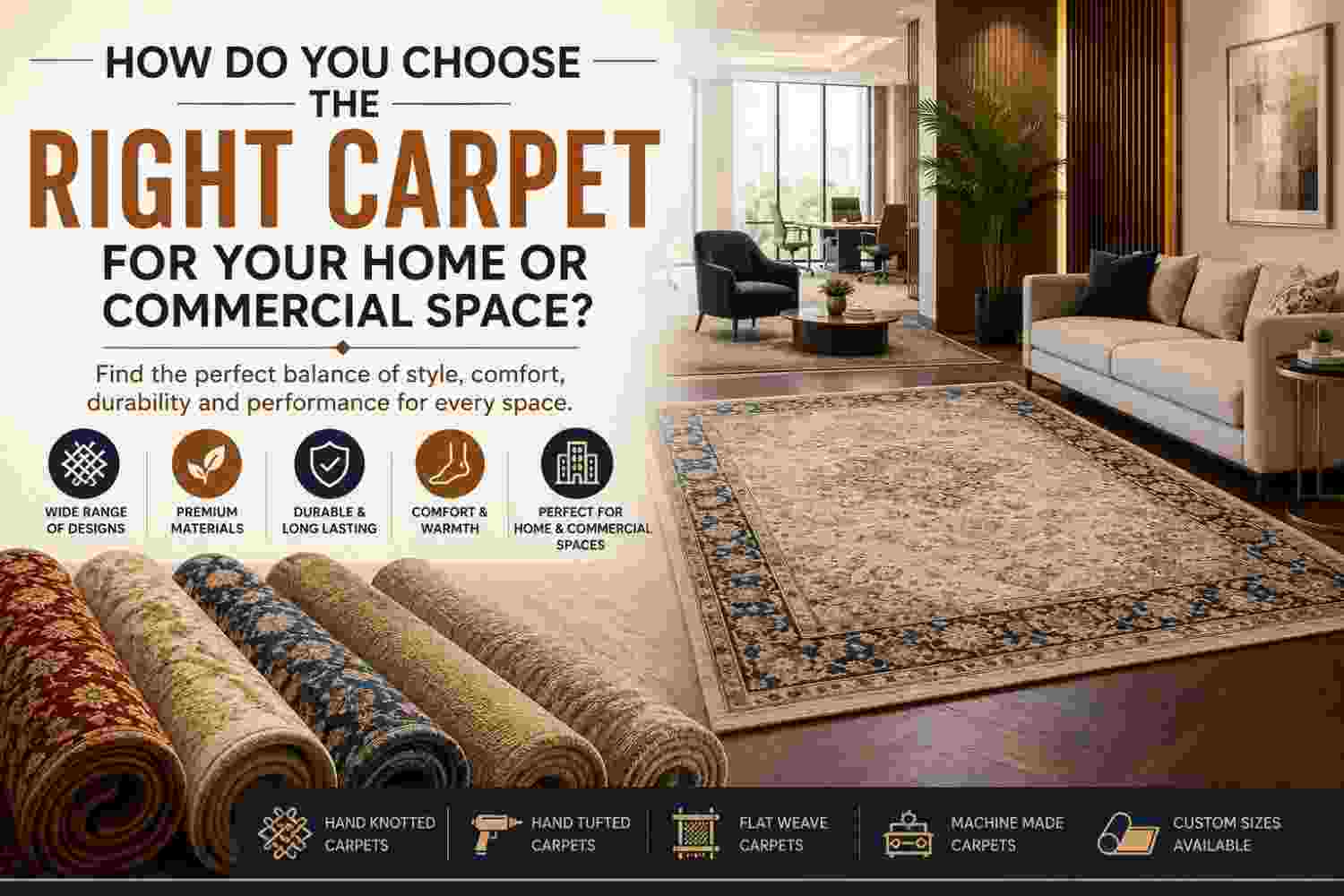
The right carpet should be chosen according to the room, traffic level, material, size, design, comfort, maintenance requirements, and overall interior style. A carpet that works well in a bedroom may not be the best choice for a busy hotel lobby or office.
Carpets can add warmth, comfort, texture, and visual character to an interior. They are available in different materials, patterns, sizes, constructions, and finishes, making it important to understand your requirements before making a purchase.
Whether you are furnishing a home, hotel, office, showroom, or another commercial space, the right carpet should balance appearance with practical performance.
Start by considering where the carpet will be used and how much daily traffic it will receive.
Before selecting a carpet, think about:
A decorative carpet for a low-traffic bedroom can have different requirements from a durable carpet for a commercial environment.
The best carpet is therefore not necessarily the most expensive one. It is the one that fits the specific requirements of the space.
The best carpet type depends on the function of the room, the amount of traffic, and the desired appearance.
For a bedroom, softness and comfort may be priorities.
For a living room, homeowners may focus more on design, texture, comfort, and size.
For offices, hotels, and other commercial spaces, durability and maintenance may become more important.
Different spaces can benefit from different carpet constructions and materials, including:
The choice should be based on how the carpet will actually be used.
The choice between hand-knotted and machine-made carpets depends on your priorities for craftsmanship, design, budget, production consistency, and intended use.
Hand-knotted carpets are traditionally valued for their craftsmanship and detailed construction. They can be suitable for interiors where an artistic or premium appearance is important.
Machine-made carpets can provide consistent production and may be suitable for projects requiring larger quantities or specific repeatable designs.
Neither option is automatically better for every application.
Consider:
The main difference is the manufacturing technique used to create the carpet.
Hand-knotted carpets are created by individually tying knots onto the foundation of the rug, while hand-tufted carpets are created by inserting yarn into a backing using a tufting process.
This difference can affect:
Hand-tufted carpets can provide flexibility in creating different patterns and shapes, while hand-knotted carpets are often valued for their traditional craftsmanship.
The right choice depends on the desired look and application.
Wool is often chosen for durability and resilience, while synthetic and other materials can offer different combinations of affordability, maintenance, appearance, and performance.
Material selection should depend on the environment and expected usage.
For example, wool can be attractive for interiors where warmth, softness, and natural texture are important.
Other materials may be considered when buyers prioritize specific factors such as:
Rather than selecting a material based solely on reputation, consider how it will perform in your particular space.
Wool carpets can be suitable for many busy environments because wool has natural resilience, but the specific construction and expected traffic should still be considered.
Hotels, offices, commercial buildings, and other high-use spaces can place greater demands on carpets.
For such applications, look at:
A well-selected carpet can provide both visual appeal and practical performance when matched correctly to its environment.
Carpet design can significantly influence the appearance and atmosphere of a room.
A carpet can introduce:
For modern interiors, designers may prefer subtle patterns, geometric designs, or neutral colors.
Traditional interiors may work well with detailed motifs, classic patterns, and richer color combinations.
The carpet should complement the furniture, walls, flooring, lighting, and overall design theme.
Choose a carpet color that complements the room while considering traffic, lighting, furniture, and maintenance.
Lighter colors can make a room feel more open but may show dirt more easily.
Darker or richer shades can create a more intimate appearance and may be practical for some busy areas.
When choosing a color, consider:
It is useful to view a physical sample in the actual room because colors can look different under different lighting conditions.
The carpet size should be determined by the dimensions of the room and how you want the carpet to interact with the furniture.
For a living room, for example, the carpet may be positioned under the central furniture arrangement.
For a bedroom, it may extend around or underneath the bed.
For a hotel or commercial project, the carpet size may need to correspond with a larger floor plan or specific installation requirements.
Before ordering, measure the installation area carefully and account for furniture placement.
Not necessarily; whether a carpet should cover the entire floor depends on the room design and functional requirements.
A wall-to-wall carpet can create a continuous appearance and may be suitable for offices, hotels, bedrooms, and other spaces.
An area carpet can instead be used to define a particular zone within a room.
For example, an area carpet can visually separate:
The decision should be based on both design and practical requirements.
Carpets can add comfort, warmth, texture, and visual appeal while helping define different areas within an interior.
They can also contribute to the overall atmosphere of a room.
Depending on the material and construction, carpets can provide:
This makes them useful in both residential and commercial environments.
Yes, carpets can be used throughout hospitality environments when the material and construction are selected according to the area's traffic and design requirements.
Hotels may use carpets in:
Each area may have different requirements.
A hotel lobby, for example, may experience much higher foot traffic than a guest bedroom. The carpet should therefore be selected according to the specific location.
An office carpet should balance durability, professional appearance, comfort, and maintenance requirements.
Consider:
Neutral shades and subtle patterns are often easier to integrate into professional interiors, although the final choice depends on the company's design preferences.
For larger projects, consistency in color and construction can also be important.
Yes, carpets are widely suitable for commercial interiors when the construction and material match the expected usage.
Commercial applications can include:
Commercial carpets may need to withstand significantly more traffic than residential carpets.
For this reason, buyers should prioritize suitability and durability rather than selecting a carpet based only on its appearance.
Carpet construction affects its appearance, texture, durability, and suitability for different applications.
Common construction methods include:
Each method has different characteristics.
A buyer should understand the construction before making a purchase, especially when the carpet is intended for a commercial project or long-term installation.
A flat-woven carpet is produced without a deep pile, creating a relatively flat surface that can provide a distinctive texture and appearance.
Flat-woven carpets can be useful when a lower-profile design is preferred.
They can also complement interiors where a clean, understated, or traditional aesthetic is desired.
The suitability of a flat-woven carpet still depends on the specific material, construction quality, and expected usage.
For a busy area, prioritize suitable construction, durability, maintenance requirements, and resistance to everyday wear.
High-traffic spaces may include:
When selecting a carpet for such locations, ask about:
The most attractive carpet may not always be the most practical choice for a heavily used area.
Texture can add depth and visual interest to an interior while also influencing how the carpet feels underfoot.
A plush surface can create a softer and more luxurious appearance.
A flatter construction can provide a cleaner and more structured look.
Texture can be selected according to:
Combining different textures within an interior can also create visual contrast.
Choose a carpet that complements the furniture instead of competing with it.
If the furniture already has strong patterns, a simpler carpet may create better balance.
If the furniture is minimalist, a patterned or textured carpet can become a stronger decorative feature.
Consider:
The carpet should help bring the different elements of the room together.
Before buying, check the material, construction, dimensions, design, quality, maintenance requirements, and suitability for the intended space.
Important questions include:
These questions become particularly important when purchasing carpets for hotels, offices, or other large projects.
Yes, requesting a sample can help you evaluate the actual color, texture, material, and finish before placing a larger order.
A sample allows you to see how the carpet works with:
For commercial projects, samples can also help stakeholders approve the final design before production or installation.
Regular cleaning, proper handling, timely stain removal, and appropriate maintenance can help preserve the appearance and condition of a carpet.
Basic maintenance practices include:
Different materials require different cleaning methods, so avoid using harsh chemicals without confirming that they are suitable for the carpet.
Natural-fiber carpets can be a good choice when buyers value natural materials, texture, comfort, and a distinctive appearance.
Depending on the product, natural materials can provide unique visual and tactile qualities.
However, buyers should also consider:
The right natural-fiber carpet depends on the specific environment.
A luxury interior generally benefits from a carpet that complements the design through quality materials, detailed craftsmanship, refined texture, and an appropriate pattern.
Depending on the project, buyers may consider:
The carpet should support the overall design rather than simply appear expensive.
Customization may be available for projects requiring specific sizes, colors, patterns, materials, or designs.
Customized carpets can be useful for:
Before confirming a custom order, discuss the exact requirements, production timeline, dimensions, and sample approval process with the supplier.
A good carpet provides the right combination of appearance, functionality, durability, comfort, and suitability for its intended environment.
A carpet should not be judged only by its purchase price.
Consider its:
A well-selected carpet can enhance an interior while providing practical value for years.
Carpets can be used in a wide range of residential, hospitality, commercial, and institutional environments.
Common applications include:
The carpet type should always be selected according to the specific environment.
For buyers looking for carpets for residential and commercial interiors, selecting the material and construction according to the actual application can help achieve a better balance between appearance and performance.
The best carpet is the one that matches your space, traffic level, design requirements, material preferences, maintenance expectations, and budget.
There is no single carpet that is perfect for every room or project.
A bedroom, hotel lobby, office, showroom, and living room can all require different specifications.
Start by identifying how the space will be used, then select the appropriate material, construction, size, color, and design.
Choosing the right carpet requires a balance between style and practicality.
Before making a decision, consider where the carpet will be installed, how much traffic it will receive, what material and construction are appropriate, and how the design will work with the existing interior.
Hand-knotted, hand-tufted, flat-woven, machine-made, wool, synthetic, and natural-fiber carpets can all serve different purposes.
For residential spaces, comfort and appearance may be the main priorities. For hotels, offices, and other commercial environments, durability, maintenance, consistency, and long-term performance can become equally important.
Most importantly, request samples whenever possible and evaluate the actual material before placing a large order.
For projects searching for carpets for residential and commercial interiors, choosing the right combination of material, construction, size, and design can help create an attractive and functional space.