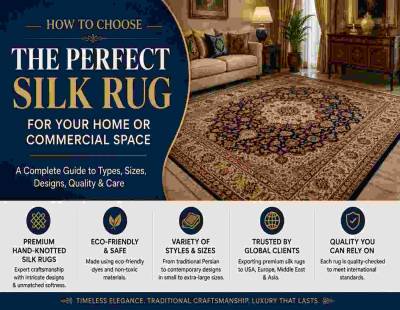

A rug can completely change the look and feel of a room. It can make a space feel warmer, define a seating area, introduce colour, and add texture to an otherwise plain interior. But choosing the right rug is not simply about finding a pattern you like. The colour and texture of the rug should work with the walls, flooring, furniture, lighting, and other decorative elements.
When colour and texture are balanced correctly, a rug can bring a room together without making it feel too busy. If they are poorly matched, even an attractive rug can compete with the rest of the décor.So, how do you choose a rug that balances colour and texture in a room? The key is to consider the room as a whole rather than selecting the rug in isolation.
Colour influences the visual mood of a room, while texture affects how the space feels and how much visual depth it has.
A bold-coloured rug can become the focal point of a room. A textured neutral rug, on the other hand, can add interest without dominating the décor.
The right combination can help you:
The goal is not necessarily to make everything match. Instead, aim for visual harmony.
Before choosing a rug, look at the colours that already dominate the room.
Consider your:
If the room already contains several strong colours, a neutral rug may provide balance. If the furniture and walls are mostly neutral, a colourful rug can introduce personality.
For example, a beige or cream sofa can work well with a rug featuring muted blue, green, terracotta, or charcoal accents. The rug does not have to exactly match the sofa; it simply needs to connect naturally with the room's existing colour palette.
One of the easiest ways to choose the right rug is to decide what role you want it to play.
Choose stronger colours, distinctive patterns, or noticeable texture. Keep some of the surrounding décor relatively simple so the rug has room to make an impact.
Choose neutral shades and subtle patterns. A textured rug in beige, ivory, grey, or another understated colour can add depth without becoming the centre of attention.
Neither approach is better. It depends on the atmosphere you want to create.
The commonly used 60-30-10 colour principle can provide a useful starting point for interior styling.
Roughly:
Your rug can contribute to either the dominant, secondary, or accent colour depending on its design.
For example, in a room dominated by warm neutral walls and furniture, a rug containing a smaller amount of rust or deep blue can introduce an accent without overwhelming the space.
This is a guideline, not a strict rule. Your room can look beautiful without following exact percentages.
If your rug has a strong colour or detailed pattern, consider choosing a relatively subtle texture.
A heavily patterned rug combined with extremely pronounced texture can make a room feel visually crowded.
For a bold rug, look for:
This allows the colour to remain the main visual feature.
Neutral interiors do not have to look boring.
If your room uses shades such as cream, beige, white, taupe, or grey, texture can provide visual interest without adding many new colours.
A textured wool rug, for example, can introduce depth through its fibres and weave while maintaining a calm colour palette.
You can also combine different textures through:
The result can be a layered interior that feels comfortable rather than visually flat.
Your rug should relate to the textures already present in the room.
If you have smooth leather furniture, a textured rug can soften the overall look.
If your room already contains heavily textured upholstery, woven accessories, and patterned curtains, a simpler rug may provide a better balance.
Think of texture as a visual conversation between different elements.
A useful approach is to combine contrasting textures while keeping the colour palette controlled.
Different rug colours and textures work better with different design approaches.
Modern rooms often benefit from clean patterns, geometric designs, neutral colours, and controlled texture.
Choose subtle colours and simple textures. A neutral rug can provide warmth without disrupting the clean appearance.
Traditional rooms can accommodate richer colours, decorative patterns, and more detailed textures.
Layered patterns, earthy colours, and varied textures can work particularly well in relaxed bohemian spaces.
Natural fibres, warm neutral shades, and visibly textured weaves can complement rustic furniture and materials.
Your floor colour should also influence your rug choice.
A dark floor can work well with lighter rugs that create contrast and brighten the space.
A light floor provides more flexibility, allowing you to choose either a darker rug for contrast or a similarly light rug for a soft, continuous appearance.
Wood flooring can pair beautifully with earthy colours, natural textures, and warm neutrals.
The key is to create enough contrast for the rug to remain visible without making it look disconnected from the floor.
Colour and texture are important, but even the most beautiful rug can look wrong if it is too small.
In a living room, the rug should generally help visually connect the main seating arrangement. Depending on the room layout, you may place the front legs of furniture on the rug or use a larger rug to accommodate the complete seating area.
In a bedroom, a rug can extend beyond the sides and foot of the bed or be used as smaller bedside rugs.
For a dining room, choose a rug that allows chairs to remain comfortably on the rug when pulled away from the table.
Measure your space before purchasing rather than estimating the size visually.
The amount of natural light in your room can affect how rug colours appear.
A colour that looks soft and warm in a brightly lit showroom may appear different in a darker room.
Before choosing a rug, consider:
If possible, view a rug sample inside the room where it will be used.
Pattern size can affect the perceived balance of a room.
Large patterns can make a strong visual statement and may work well in larger rooms with relatively simple furniture.
Smaller or subtle patterns can be easier to integrate into rooms that already contain decorative elements.
If your sofa has a bold pattern, consider a rug with a quieter design. If your furniture is mostly plain, the rug can provide more visual interest.
The ideal rug texture is also influenced by practical considerations.
A soft, comfortable rug may be ideal for a bedroom or reading area.
A durable, relatively easy-care construction may be more appropriate for a busy living room or family area.
For dining spaces, consider how easily the rug can be cleaned because food and drink spills are more likely.
For entryways, durability and ease of maintenance may be more important than a luxurious texture.
Different rug materials create different visual and tactile effects.
Wool rugs can provide warmth, softness, natural texture, and a premium appearance.
Cotton rugs can offer a lighter and more casual feel and may suit relaxed interiors.
Silk can create a refined appearance with a distinctive sheen, although delicate rugs require appropriate care.
Natural fibres can add an earthy, organic texture to modern interiors.
Synthetic rugs can provide a wide range of colours, patterns, and practical options depending on the specific fibre and construction.
Always consider the room's usage and cleaning requirements before choosing a material.
Rug layering can create depth and personality, but it needs some control.
A common approach is to use a larger neutral rug underneath a smaller patterned or textured rug.
For example, a natural-fibre base rug can provide subtle texture, while a smaller decorative rug introduces colour.
When layering:
Perfect matching can sometimes make an interior feel flat. Coordination is generally more effective than exact matching.
If the room already has patterned curtains, cushions, artwork, and furniture, a highly patterned rug may create visual clutter.
A rug can look good in a photograph but feel disconnected from the room if its texture does not complement the surrounding materials.
An undersized rug can make furniture appear disconnected.
A beautiful rug may not be practical if its material and construction do not suit the way the room is used.
If you're unsure where to begin, try this simple process:
Step 1: Identify the room's dominant colour.
Step 2: Decide whether you want the rug to blend in or stand out.
Step 3: Look at the existing textures in the room.
Step 4: Choose a rug texture that adds contrast without creating visual overload.
Step 5: Select a colour that connects with at least one or two existing elements.
Step 6: Measure the room and furniture before selecting the rug size.
Step 7: Consider material, maintenance, and foot traffic.
Step 8: View the rug in the actual room's lighting before making your final decision whenever possible.
The right rug should complement your interior while also fitting your practical needs. Rugsinindia offers a variety of rugs in different colours, materials, designs, sizes, and constructions, giving homeowners options for different interior styles.
Whether you want a subtle textured rug for a minimalist bedroom or a statement design for your living room, considering colour, texture, material, and room usage together can help you make a more informed choice.
Choosing a rug that balances colour and texture is about creating harmony rather than making every element identical. Start with the colours and textures already present in your room, decide how much attention you want the rug to attract, and then select the appropriate size, material, pattern, and texture.
A well-chosen rug can connect furniture, soften hard flooring, introduce colour, and give a room a stronger sense of character. Take time to consider the complete space, and your rug will feel like a natural part of the room rather than an afterthought.