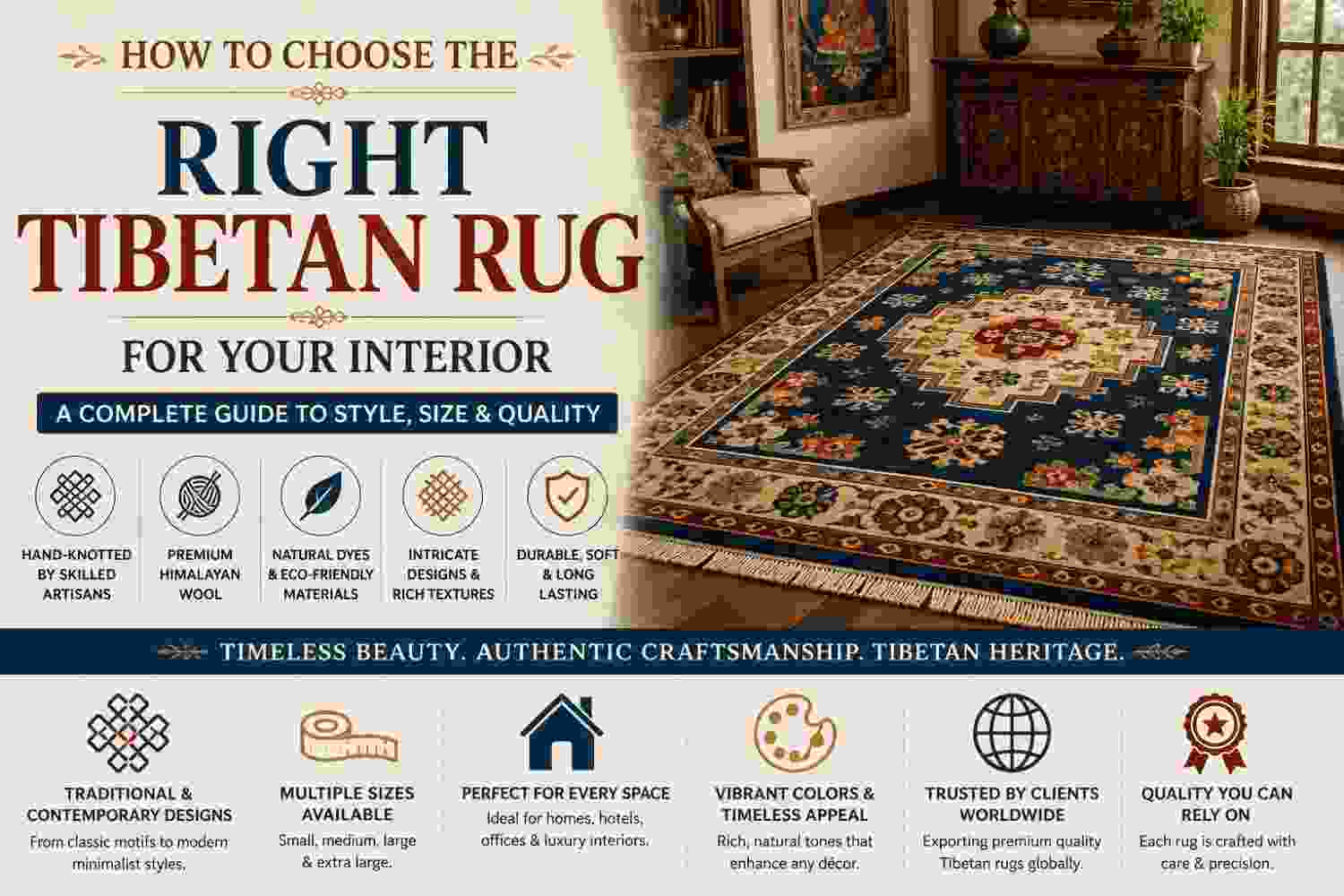
Tibetan rugs are known for their rich textures, intricate patterns, handcrafted character, and timeless appeal. Traditionally inspired designs combined with skilled weaving techniques make them an attractive choice for homes, hotels, offices, and luxury interiors.
Made with materials such as high-quality wool and natural dyes, these rugs can feature geometric patterns, floral motifs, traditional Buddhist symbols, medallions, dragons, and minimalist designs. The source also highlights hand-knotting by skilled artisans as an important part of their construction.
Choosing the right rug, however, involves more than simply selecting a beautiful pattern. Size, material, design, colour, craftsmanship, and the intended space should all be considered before making a decision.
Their combination of traditional craftsmanship, rich texture, distinctive designs, and handmade character makes them special. The source describes these rugs as handwoven products reflecting Tibetan weaving traditions and states that they are carefully hand-knotted by skilled artisans.
This handcrafted approach means each piece can have its own visual character. Traditional motifs can also add cultural and artistic interest to an interior while contemporary patterns can make the rug suitable for modern décor.
For buyers looking for something more distinctive than a mass-produced floor covering, handcrafted Tibetan-style rugs can offer a strong decorative presence.
High-quality wool and natural dyes are highlighted as key materials used in the rugs described in the source. The source also refers to Himalayan wool as being selected for its softness and resilience.
Wool is particularly suitable for creating rugs with a rich and comfortable texture. The use of natural dyes can contribute to the visual character of traditional designs while supporting the focus on eco-friendly materials mentioned in the source.
For buyers, understanding the material composition is important because it can influence the rug's texture, appearance, and suitability for a particular interior.
Traditional and contemporary designs are both available, allowing buyers to choose according to their interior style. The source mentions several distinctive design categories, including geometric patterns, floral motifs, Buddhist symbols, medallions, dragon motifs, and minimalist modern designs.
Traditional designs can work well in interiors that emphasize heritage and decorative detailing. Geometric Tibetan-inspired rugs can provide a structured appearance, while floral motifs can create a softer decorative effect.
For contemporary interiors, minimalist patterns can provide visual interest without overwhelming the existing décor.
The source describes these rugs as hand-knotted and emphasizes durability and uniqueness as benefits of their craftsmanship. Skilled artisans carefully create each piece, giving it a handmade character.
The source also describes Himalayan wool as soft and resilient. However, the exact lifespan of a rug depends on factors such as construction, material, placement, foot traffic, and maintenance.
For this reason, buyers should consider where the rug will be installed before selecting a particular design and construction.
The right rug size depends on the dimensions of the room, furniture arrangement, and area that needs to be covered. The available size categories mentioned in the source are small, medium, large, and extra large.
A small rug may work as an accent piece, while a large or extra-large option can help define a bigger seating or hospitality area.
Before ordering, measure the intended space carefully. Consider how much of the floor should remain visible and how the rug will interact with surrounding furniture.
For commercial projects, large handmade rugs may be suitable for spacious hotels, offices, and luxury areas, while smaller sizes may work better in boutiques or individual rooms.
They can be used in residential interiors as well as hotels and other luxury spaces. The source specifically identifies homes, hotels, and luxury spaces as suitable applications.
In a living room, a patterned rug can become a central decorative feature. In bedrooms, its rich texture can complement a comfortable and sophisticated setting.
Hotels and luxury commercial spaces can also use decorative wool rugs to create a distinctive atmosphere. The design should match the overall interior theme and the level of foot traffic expected in the space.
Choose a minimalist pattern, balanced colours, and a design that complements rather than competes with modern furniture. The source specifically mentions minimalist modern designs as part of the available collection.
Modern interiors often benefit from simpler visual elements. A geometric or understated pattern can add texture and warmth while maintaining a clean appearance.
For a contemporary project, modern Tibetan-inspired floor rugs can provide a connection to traditional craftsmanship without requiring a heavily traditional interior design.
Traditional motifs remain an important choice for buyers who want to bring cultural and artistic character into their interiors. The source mentions medallion patterns, dragon motifs, floral designs, and traditional Buddhist symbols.
These patterns can be especially suitable for interiors influenced by traditional, global, or heritage-inspired décor.
A carefully selected traditional Tibetan design rug can function as both a floor covering and a decorative artwork, particularly when the pattern contains detailed motifs.
The source emphasizes natural dyes and eco-friendly materials as part of its approach to rug production. It states that the rugs are created with a focus on sustainability and ethical craftsmanship.
For environmentally conscious buyers, material and dye choices can be important considerations. However, the source does not provide specific environmental certifications or independent sustainability testing, so buyers looking for certified claims should request supporting documentation from the supplier.
A suitable supplier should offer quality materials, different designs and sizes, skilled craftsmanship, and options that match residential and commercial requirements.
The source describes suppliers offering traditional and custom-made rugs, including different patterns and designs. It also highlights an international distribution network and the ability to supply handmade products to worldwide clients.
When selecting a handmade rug supplier, buyers should discuss material, size, design, colour requirements, production method, and intended application before placing an order.
Yes, the source states that custom-made options are available. Customization can be useful when a standard design does not match the dimensions or visual requirements of a particular interior.
A custom rug can be developed around the room's measurements, preferred pattern, colour scheme, and overall design direction, subject to the supplier's capabilities.
This can be particularly useful for custom wool rugs for hotels, luxury residences, boutiques, and interior design projects where consistency with the surrounding décor is important.
Choosing the right Tibetan-inspired rug involves balancing design, material, size, craftsmanship, and intended use. Hand-knotted wool rugs with traditional motifs can add warmth and heritage to classic interiors, while geometric and minimalist designs can work well in contemporary spaces.
The source highlights high-quality wool, natural dyes, skilled hand-knotting, traditional motifs, modern designs, and multiple sizes as important features of its rug collection. These options make it possible to select a floor covering that complements different residential and commercial environments.
Whether you are furnishing a home, hotel, boutique, or luxury space, selecting the right combination of texture, pattern, size, and craftsmanship can help create an interior with lasting visual appeal.